 Revcodex
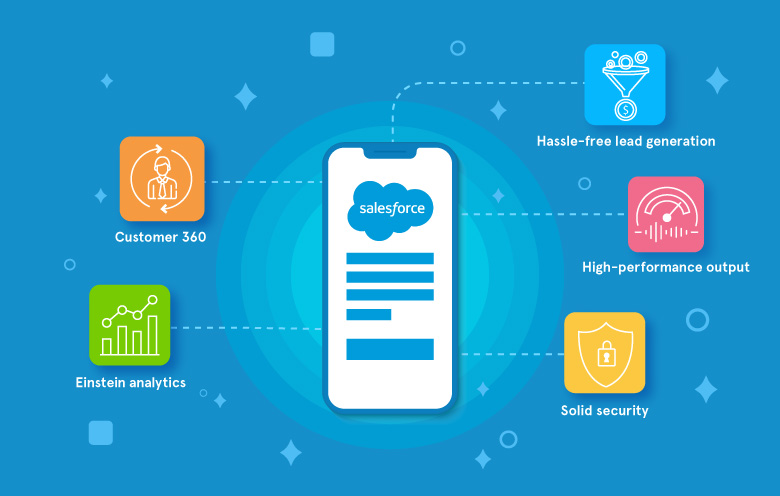
Salesforce has become an important platform for businesses looking to manage customer relationships, automate workflows, improve sales performance, and streamline daily operations. However, the standard Salesforce features may not always meet every organization’s specific requirements. Businesses often need additional tools for marketing automation, customer support, reporting, document management, data integration, and industry-specific processes. This is where Salesforce AppExchange becomes valuable. It provides a marketplace of applications, components, and solutions that extend Salesforce functionality and help organizations address their unique business challenges. Choosing the right application can improve productivity, reduce manual work, and help teams make better use of their Salesforce investment.
For businesses operating in competitive markets, selecting an AppExchange solution requires more than comparing features or installation prices. Organizations must consider compatibility, security, scalability, integration requirements, user experience, vendor reliability, and long-term costs before making a decision. Companies may also need professional guidance to identify the right solution or develop a custom application when an existing product does not fully meet their needs. With the right approach, Salesforce AppExchange development in USA can help businesses create tailored applications, while Salesforce AppExchange consulting in USA can support application evaluation, implementation planning, and technical decision-making. Revcodex helps businesses explore Salesforce-related development and integration opportunities to build technology solutions aligned with their operational goals.
What Is Salesforce AppExchange?
Salesforce AppExchange is an online marketplace where businesses can discover applications, integrations, components, and other solutions designed to work with Salesforce. These tools extend the platform’s capabilities and allow organizations to customize their CRM environment without developing every feature from scratch. Depending on business requirements, companies can explore solutions for lead management, sales forecasting, customer service, analytics, accounting, workflow automation, and many other functions.
AppExchange applications can support different Salesforce products and business processes. Some solutions provide ready-to-use functionality, while others offer configurable features that administrators can adapt to organizational needs. There are also applications designed for specific industries or specialized workflows. Before selecting a solution, businesses should understand the problem they want to solve and determine whether an existing application can address it effectively.
For example, a sales team may need an application that simplifies quote generation, while a customer support department may require better case management or communication tools. A company handling large amounts of customer data might prioritize reporting, data quality, and integration capabilities. Identifying the intended use case first makes the application selection process more focused and practical.
Why Choosing the Right Salesforce AppExchange App Matters
Selecting an appropriate AppExchange application can influence how effectively employees use Salesforce in their daily work. A suitable tool can automate repetitive tasks, improve data visibility, reduce manual errors, and make information easier to access. When applications match existing workflows, employees can complete routine activities more efficiently and spend more time on meaningful business tasks.
On the other hand, choosing an application without evaluating its suitability may create unnecessary complexity. A tool with excessive features can be difficult to manage, while a solution that lacks essential functionality may require additional customization. Poor integration can also create disconnected data, duplicate records, and inconsistent reporting.
Businesses should therefore evaluate applications based on their actual requirements rather than popularity alone. The objective is to select a solution that solves a clearly defined problem, supports existing Salesforce processes, and remains useful as the organization grows.
1. Identify Your Business Requirements Before Searching
The first step in selecting the right AppExchange application is to define the business problem. Organizations should identify which processes need improvement, which teams will use the application, and what outcomes they expect from the investment. This prevents businesses from spending time evaluating applications that do not address their core requirements.
Start by reviewing current workflows and identifying recurring challenges. These may include manual data entry, delayed reporting, inefficient lead assignment, disconnected systems, repetitive administrative work, or limited visibility into customer interactions. Speak with employees who handle these activities because they can often identify practical problems that may not be obvious during management-level discussions.
Next, separate essential requirements from optional features. Essential requirements are the capabilities an application must provide to be useful. Optional features may improve convenience but should not determine the decision if the application fails to meet the primary objective.
For example, a business looking for workflow automation may prioritize configurable rules, approval processes, notifications, and reporting. An organization that needs customer data synchronization may focus on integration reliability, field mapping, error handling, and synchronization frequency.
Clear requirements make it easier to compare Salesforce AppExchange services in USA and identify whether a ready-made application, a configurable solution, or custom development is the most appropriate option.
2. Evaluate Features and Functionality Carefully
Once the requirements are documented, compare the features offered by shortlisted applications. Do not assume that two applications with similar descriptions will provide the same practical capabilities. Review product documentation, demonstrations, configuration options, and supported workflows to understand how each solution operates.
Pay attention to whether the application supports your existing processes or requires substantial changes to the way employees work. Consider whether administrators can customize fields, workflows, permissions, notifications, and reports without extensive development. Also examine whether the application includes the functions your team needs today and whether additional modules are required for future use.
A useful evaluation should focus on functionality rather than the number of features. An application with a smaller set of relevant capabilities may be more effective than a complex tool that introduces unnecessary steps. Businesses should also verify whether important features are included in the advertised price or require separate subscriptions.
Before making a final decision, test the application against realistic business scenarios. A demonstration based on your team’s actual workflows can reveal limitations that may not be apparent from a product listing.
3. Check Compatibility With Your Salesforce Environment
Compatibility is a critical consideration when selecting an AppExchange application. Businesses may use different Salesforce products, editions, configurations, custom objects, and automation processes. An application that works well in one environment may require additional setup or may not support every feature in another.
Review the application’s supported Salesforce products, technical requirements, installation instructions, and version-related information. Confirm whether it works with the objects, fields, permissions, and workflows your organization relies on. If your Salesforce environment contains extensive customizations, ask the application provider whether additional configuration or development will be necessary.
It is also important to understand how the application interacts with existing automation, including flows, approval processes, and other installed packages. Overlapping functionality can cause unexpected behavior if the applications are not configured correctly.
Businesses with complex environments may benefit from Salesforce AppExchange consulting in USA to assess compatibility, identify implementation risks, and create a practical deployment plan. A technical review before installation can reduce avoidable disruption and help ensure that the selected solution fits the existing CRM architecture.
4. Review Security, Privacy, and Compliance Requirements
Security should be one of the highest priorities when evaluating any application that accesses business or customer information. Depending on the application, it may process contact details, sales records, financial information, support conversations, or other confidential data. Organizations should understand what information the application can access and how that information is handled.
Begin by reviewing the publisher’s security documentation, data access requirements, permission model, privacy policy, and available compliance information. Confirm whether the application requests only the permissions needed for its intended functionality. Review how user access is controlled and whether administrators can restrict sensitive operations to authorized employees.
Businesses should also understand how the provider stores, processes, transfers, and retains data. If the application connects to an external service, investigate the data exchange process and the responsibilities of each provider. Organizations with specific regulatory obligations should confirm that the solution meets their internal policies and applicable legal requirements.
A listing in a marketplace should not replace an independent security assessment. Businesses must evaluate the application’s suitability for their own risk profile, data sensitivity, and compliance obligations. Where necessary, involve Salesforce administrators, security teams, and legal or compliance specialists before approving installation.
5. Compare User Reviews, Ratings, and Publisher Reliability
Reviews can provide useful insights into how an application performs in real business environments. They may highlight ease of use, customer support quality, implementation challenges, missing features, or common technical issues. However, ratings should be considered alongside other evaluation criteria rather than treated as the only measure of quality.
Read recent reviews and look for recurring patterns. A single negative review may reflect a specific use case, but repeated comments about support delays, unexpected costs, or integration difficulties deserve closer attention. Similarly, positive reviews are more useful when they describe measurable benefits or explain how the application supports a particular workflow.
Evaluate the publisher’s experience, product documentation, release history, support options, and responsiveness. Determine whether the provider offers onboarding assistance, troubleshooting resources, training, and a clear process for reporting issues. Ask how frequently the application is maintained and how updates are communicated.
For business-critical applications, publisher reliability matters because the solution may become an important part of daily operations. A strong provider relationship can help organizations resolve issues, adapt to new requirements, and maintain the application over time.
6. Assess Integration With Other Business Systems
Many organizations rely on multiple systems for accounting, marketing, customer support, analytics, enterprise resource planning, and communication. The right AppExchange application should work effectively with the broader technology environment instead of creating another isolated data source.
Review the application’s native integrations and determine whether it supports the systems your organization already uses. Check whether integration is available through standard connectors, APIs, middleware, or custom development. Understand which data moves between systems, how frequently synchronization occurs, and how conflicts or failed transactions are handled.
For example, a company connecting Salesforce with an accounting platform may need customer, invoice, payment, and transaction information to remain consistent. A marketing team may require campaign engagement data to be available within Salesforce for lead qualification and reporting. In each case, the integration must support accurate data exchange and provide a way to identify and resolve errors.
If the required connection is not available out of the box, Salesforce AppExchange development in USA may help businesses build additional functionality or custom integration components. Revcodex can be considered for Salesforce-related development and integration requirements where a tailored technical approach is needed. The exact solution should be determined after reviewing the systems involved, data requirements, and business objectives.
7. Understand Pricing and the Total Cost of Ownership
Application pricing is another important factor, but the lowest subscription price does not necessarily represent the lowest overall cost. Businesses should calculate the total cost of ownership by considering licensing, implementation, configuration, training, integration, maintenance, and ongoing support.
Some applications charge per user, while others use usage-based pricing, tiered subscriptions, or additional fees for advanced features. Confirm how pricing changes as the organization adds users, increases data volume, or requires additional functionality. It is also important to review contract terms, renewal conditions, cancellation policies, and any charges associated with implementation or premium support.
A cost comparison should account for the value the application is expected to deliver. If a tool reduces manual work, improves data accuracy, or shortens the time needed to complete a process, those benefits may justify a higher initial investment. However, projected savings should be based on realistic assumptions rather than unsupported estimates.
Businesses should prepare a budget that includes both initial and recurring expenses. This approach makes it easier to compare alternatives and prevents unexpected costs after deployment.
8. Test the Application Before Full Implementation
Whenever possible, test shortlisted applications in a Salesforce sandbox or another appropriate non-production environment before introducing them to live business processes. Testing allows administrators and end users to confirm that the application behaves as expected without immediately affecting daily operations.
Create a testing plan based on real use cases. Verify essential features, permissions, workflow behavior, data accuracy, integration reliability, and reporting results. If the application changes records or triggers automation, check how it interacts with existing Salesforce configurations.
Include employees who will use the application regularly. Their feedback can reveal usability problems, confusing navigation, unnecessary steps, or training needs. Collect feedback from different user roles because managers, administrators, sales representatives, and support teams may interact with the same application differently.
Before going live, document the configuration, define user permissions, prepare training materials, and establish a process for handling technical issues. A controlled rollout can help teams identify problems early and improve adoption. For complex deployments, professional Salesforce AppExchange services in USA can support planning, configuration, testing, and implementation activities according to the project’s scope.
9. Consider Scalability and Future Business Growth
The application you select should support current needs while remaining suitable for future growth. As a business expands, it may add employees, increase transaction volumes, introduce new sales processes, or connect additional systems. A solution that works for a small team may not be appropriate for a larger or more complex organization.
Ask whether the application supports additional users, configurable workflows, larger data volumes, and expanded reporting requirements. Review any known limits, licensing restrictions, performance considerations, and dependencies on third-party services. Also determine whether the publisher has a clear product development and maintenance approach.
Scalability does not mean purchasing the most advanced application available. Instead, it means selecting a solution that can accommodate realistic future requirements without introducing unnecessary cost or complexity today.
Businesses should also consider the long-term flexibility of their Salesforce environment. Applications that rely on documented interfaces, clear configuration options, and maintainable integration patterns may be easier to adapt as requirements change.
10. Decide Between an Existing AppExchange App and Custom Development
Not every business requirement needs a custom-built application. In many situations, an existing AppExchange solution can provide the required functionality faster and with less development effort. However, some organizations have specialized workflows, unique integration requirements, or operational needs that available applications cannot fully address.
An existing application may be the right choice when its core features match your requirements, the provider offers reliable support, and the solution can be configured without extensive customization. Custom development may be worth evaluating when essential features are missing, the business needs specialized functionality, or the organization requires deeper control over its solution.
Before choosing custom development, compare the estimated development cost, delivery timeline, maintenance responsibilities, security requirements, and long-term ownership considerations with those of existing products. Custom development introduces flexibility but also requires planning for testing, updates, documentation, and ongoing support.
Salesforce AppExchange app development in USA can help businesses explore tailored applications for specific requirements, including integrations, workflow automation, and specialized Salesforce functionality. Revcodex can support discussions around Salesforce development and integration approaches based on the business use case. The best option depends on the complexity of the requirements, available budget, internal technical resources, and expected long-term value.
Common Mistakes to Avoid When Choosing a Salesforce AppExchange App
Businesses can make better decisions by avoiding a few common mistakes during the evaluation process. One frequent issue is selecting an application because it has a high rating without checking whether its features match the intended use case. Another is ignoring implementation requirements and assuming that installation alone will make the solution ready for daily operations.
Organizations should also avoid overlooking security permissions, integration limitations, recurring fees, and user training. Failing to involve employees in the evaluation process can lead to low adoption, even when the application is technically suitable. Similarly, installing multiple applications with overlapping functionality can create unnecessary complexity and increase maintenance effort.
A structured evaluation process helps reduce these risks. Define business requirements, compare shortlisted solutions, verify technical compatibility, assess security, calculate total costs, and test the preferred option before full deployment.
How Revcodex Can Help With Salesforce AppExchange Requirements
Selecting and implementing the right Salesforce solution requires an understanding of business processes as well as technical requirements. Companies may need assistance assessing existing applications, planning integrations, customizing workflows, or developing functionality that supports a specific operational goal.
Revcodex offers a point of contact for businesses exploring Salesforce-related development and integration needs. Depending on the project scope, organizations can discuss their requirements, existing Salesforce environment, integration challenges, and desired outcomes to determine an appropriate technical approach.
For businesses evaluating Salesforce AppExchange consulting in USA, the key is to begin with a clear understanding of the problem and then assess available solutions against measurable requirements. Where a ready-made application meets those needs, configuration and implementation may be sufficient. When additional functionality is necessary, custom development or integration work may be considered after technical assessment.
The goal is to select a solution that fits the organization’s workflows, supports secure data handling, and remains manageable as business requirements evolve. Businesses should confirm the exact services, project scope, timelines, and deliverables with Revcodex before starting an engagement.
Conclusion
Choosing the right Salesforce AppExchange app involves more than browsing application listings or comparing ratings. Businesses need to identify their requirements, evaluate features, confirm compatibility, review security, assess publisher reliability, and understand integration capabilities. Pricing, user experience, scalability, and long-term maintenance should also influence the final decision.
A structured evaluation process helps organizations choose applications that solve real business problems and support efficient Salesforce operations. When an existing solution does not fully meet the requirements, custom development or integration may offer an alternative, provided the business carefully evaluates the associated costs and responsibilities.
With a clear strategy and appropriate technical guidance, businesses can make more informed decisions about Salesforce AppExchange services in USA and build a Salesforce environment that supports their operational goals. Revcodex can help organizations explore Salesforce development and integration options aligned with their requirements, helping them take a considered approach to improving CRM functionality and business processes.
FAQs
1. What is Salesforce AppExchange used for?
Salesforce AppExchange is a marketplace for applications, integrations, and components that extend Salesforce functionality. Businesses use these solutions to support processes such as sales automation, reporting, customer service, marketing, data management, and system integration.
2. How do I choose the right Salesforce AppExchange app for my business?
Start by identifying the business problem you want to solve. Then compare application features, Salesforce compatibility, security, reviews, publisher support, integration options, pricing, and scalability. Testing shortlisted applications in a suitable environment can help confirm whether they meet your requirements.
3. What is the role of Salesforce AppExchange consulting in USA?
Salesforce AppExchange consulting in USA can involve assessing business requirements, evaluating available applications, reviewing technical compatibility, planning implementation, and identifying integration or customization needs. The exact scope depends on the consulting provider and project requirements.
4. When should a business consider Salesforce AppExchange app development in USA?
A business may consider Salesforce AppExchange app development in USA when existing applications do not provide essential functionality, specialized workflows require additional capabilities, or custom integrations are needed. The decision should account for development costs, security, maintenance, and long-term business value.
5. What should I check before installing a Salesforce AppExchange application?
Review the application’s features, publisher details, security documentation, required permissions, supported Salesforce products, pricing, integration requirements, and user reviews. Test the application in an appropriate environment before deploying it to production.
6. Are Salesforce AppExchange applications free?
Some applications offer free versions or trials, while others require paid subscriptions or usage-based fees. Businesses should verify the current pricing model, available features, licensing conditions, and any additional implementation or support costs before choosing a solution.

