Revcodex

Customer service has changed significantly as businesses increasingly move conversations, support resources, and customer interactions into digital environments. Customers today often expect quick access to information, convenient communication channels, self-service options, and consistent support experiences without having to contact a service representative for every question. For organizations using Salesforce, Experience Cloud provides a way to create branded digital experiences where customers, partners, and other communities can access relevant information and interact with the business. When implemented strategically, these digital experiences can become an important part of a broader customer service operation by helping users find answers, submit requests, collaborate, and engage with support resources.
For organizations operating in competitive markets, customer service is no longer limited to resolving individual support tickets. Businesses are also looking at ways to improve self-service, reduce repetitive service requests, provide personalized information, and make customer interactions more connected across channels. Salesforce Experience Cloud Solutions in USA can support these objectives by creating customized portals and communities that connect users with Salesforce data, knowledge resources, service processes, and relevant business information. Revcodex can help businesses explore how Experience Cloud can fit into their existing Salesforce environment and customer service strategy, with the implementation approach aligned to business requirements rather than relying on a generic portal structure.
What Is Salesforce Experience Cloud?
Salesforce Experience Cloud is a Salesforce platform capability used to build digital experiences for customers, partners, employees, and other audiences. These experiences can provide users with access to selected information, resources, workflows, and Salesforce-powered interactions through a branded online environment. Organizations can design experiences around specific business needs, such as customer support portals, partner communities, knowledge centers, account management, or service interactions.
For customer service teams, Experience Cloud can serve as an additional digital touchpoint between the business and its customers. Instead of requiring customers to depend entirely on phone calls or emails, a company can provide a centralized online environment where users can find support content, access relevant information, submit cases, and interact with the organization. The specific capabilities available depend on the Salesforce products, configuration, permissions, integrations, and implementation approach used by the business.
How Experience Cloud Fits Into Customer Service Operations
Customer service operations involve multiple activities, including receiving customer questions, identifying issues, providing information, managing cases, escalating complex requests, and maintaining communication until a resolution is reached. A digital community can support several of these activities by allowing customers to complete appropriate tasks independently while connecting more complex issues to service teams.
Salesforce Experience Cloud in USA can be particularly useful for organizations that have a large customer base or recurring support questions. Instead of directing every customer to the same service channel, businesses can create structured digital experiences that guide users toward relevant resources. Customers may be able to search a knowledge base, review account-related information, submit a support case, or participate in a community discussion depending on how the Experience Cloud environment has been configured.
Improving Customer Self-Service
One of the most significant ways Experience Cloud can support customer service is through self-service. Many customer questions are repetitive and do not necessarily require direct interaction with a service agent. Questions about product usage, account processes, troubleshooting, policies, or common procedures can often be addressed through well-organized knowledge content.
A customer portal powered by Experience Cloud can bring relevant resources into one accessible location. Instead of searching multiple websites or contacting customer support for basic information, users can potentially find answers themselves. This can improve convenience for customers while allowing service representatives to spend more time on issues requiring human involvement and specialized attention.
Centralizing Knowledge for Customers
Knowledge management is an important component of modern customer service. A business may have extensive documentation, FAQs, troubleshooting guides, product information, and service instructions, but these resources only provide value when customers can find and understand them easily.
Experience Cloud can provide a structured environment for presenting relevant knowledge content to users. Businesses can organize information according to products, services, customer types, or common issues. The goal should not simply be to publish a large amount of content but to create an intuitive experience where customers can locate useful answers with minimal effort. Revcodex can help businesses consider the information architecture, user experience, Salesforce configuration, and integration requirements involved in creating a customer-facing Experience Cloud environment.
Reducing Repetitive Support Requests
Customer service teams often spend significant time responding to questions that have already been answered many times. When customers have access to useful self-service resources, some of these repetitive interactions can potentially be handled without direct agent involvement.
For example, a customer who wants to understand a standard process may be able to search a knowledge article instead of opening a support case. A user who needs basic troubleshooting information can review relevant documentation before contacting an agent. Over time, this can help organizations structure support operations more efficiently. However, self-service should complement human support rather than replace it entirely. Complex, sensitive, or account-specific issues may still require direct assistance from trained service professionals.
Case Submission Through a Digital Portal
A well-designed customer community can make it easier for users to submit support requests. Instead of sending an unstructured email, customers may be able to provide information through a guided form that captures relevant details about their issue.
Better information at the beginning of the support process can help service teams understand the problem more quickly. Depending on the configuration, customer-submitted cases can be connected with Salesforce Service Cloud processes, routing rules, automation, and agent workflows. This can create a more connected journey from customer request to internal case management.
Giving Customers Visibility Into Support Requests
Customers can become frustrated when they submit a service request and have no visibility into what happens afterward. A digital experience can provide users with appropriate information about their support cases, such as status updates or previous interactions, depending on the organization’s configuration and security model.
This type of transparency can reduce the need for customers to repeatedly contact support simply to ask for an update. It can also create a more organized communication process between the customer and service team. Businesses should carefully determine what information customers are permitted to access and ensure that the portal follows appropriate data-security and access-control practices.
Connecting Experience Cloud With Salesforce Data
One of the major advantages of using Experience Cloud within a Salesforce ecosystem is its ability to connect digital experiences with relevant Salesforce information and processes. Rather than operating as an isolated website, an Experience Cloud implementation can be designed to work with Salesforce objects, workflows, knowledge resources, and service processes according to the organization’s requirements.
This connected architecture can help create a more consistent customer journey. For example, information submitted through a customer portal can potentially become part of an internal service workflow, reducing the need for employees to manually transfer information between separate systems. The exact integration capabilities depend on the Salesforce products, permissions, data model, and technical configuration involved.
Personalizing Customer Experiences
Different customers may require different information. A business serving multiple customer segments can use Experience Cloud to create experiences that are more relevant to particular audiences. Customers may receive access to specific resources based on their relationship with the organization, account information, permissions, or community configuration.
Personalization should be used thoughtfully. Customers should see information that is genuinely relevant to their needs without creating unnecessary complexity. A well-designed portal can present useful resources while maintaining a simple navigation structure. Salesforce Experience Cloud Solutions in USA can support organizations looking to build customer-facing experiences that are connected to their broader CRM and service strategy.
Supporting Mobile Customer Service
Customers increasingly access online support through mobile devices. A customer portal that works well on smartphones and tablets can make it easier for users to search knowledge content, submit requests, check information, and interact with the business while away from a desktop computer.
Mobile usability should therefore be considered from the beginning of an Experience Cloud project rather than treated as a final adjustment. Navigation, forms, content readability, buttons, search functionality, and page performance can all influence how easily customers use the platform. The experience should be designed around real customer behavior and common support scenarios.
Creating a Consistent Brand Experience
Customer support does not exist separately from a company’s brand. The design and communication style of a customer portal can influence how users perceive the organization. A confusing or outdated portal can make the support process feel disconnected from the company’s main digital presence.
Experience Cloud allows businesses to create branded digital experiences that can align with their broader visual identity and communication approach. Organizations can consider their brand guidelines, navigation structure, content style, customer terminology, and overall user experience when building the environment. Consistency can make the portal feel like a natural extension of the company’s customer service ecosystem.
Community-Based Customer Support
Some businesses can benefit from community-driven support, particularly when customers have common questions or use products that encourage discussion and knowledge sharing. A community environment can allow users to interact with one another, share experiences, discuss solutions, and access official information from the organization.
This approach can supplement formal customer support. Experienced users may answer common questions, while official representatives can provide authoritative information where necessary. Community participation should still be moderated and governed appropriately, particularly when discussions involve account information, confidential data, or potentially inaccurate advice.
Supporting Partner and Customer Service Together
Experience Cloud is not limited to customer communities. Organizations can also create partner-facing experiences where appropriate. For businesses with complex distribution networks, resellers, service partners, or implementation partners, digital communities can provide access to relevant resources and support processes.
This can have an indirect effect on customer service. When partners have access to appropriate documentation, training resources, support information, and structured communication channels, they may be better positioned to assist customers. A unified approach can help organizations coordinate information across different groups while maintaining appropriate permissions and access controls.
Automation and Customer Service Efficiency
Automation can play an important role in improving digital customer service operations. Depending on the Salesforce configuration, businesses can automate certain processes associated with case submission, notifications, routing, data updates, and other repetitive tasks.
Automation should be applied to processes that are clearly defined and predictable. Not every customer interaction should be automated, particularly when customers have complex requirements. A good Experience Cloud implementation balances self-service and automation with access to human support when needed.
Analytics and Customer Service Insights
Customer service teams need visibility into how customers use support resources. Analytics can help organizations understand which knowledge articles are accessed, what types of cases are submitted, where users may encounter difficulties, and which support areas generate recurring questions.
These insights can inform future improvements. If a large number of customers repeatedly ask the same question, the business may decide to improve its knowledge content or simplify a related process. If users frequently abandon a portal form, the organization may review the user experience. In this way, Experience Cloud can become part of a continuous improvement strategy rather than a static customer portal.
Security and Access Management
Customer-facing Salesforce experiences require careful attention to security. Customers should only be able to access information that they are authorized to see. Organizations need to consider user identity, authentication, permissions, sharing rules, data visibility, and integration security when designing the platform.
Security requirements can vary significantly depending on the type of customer information involved. Businesses should work with experienced Salesforce professionals to review the data model and access architecture before implementation. Salesforce Experience Cloud Consulting Services in USA can be relevant for organizations that need assistance with planning, configuration, integration, security, and broader Experience Cloud strategy.
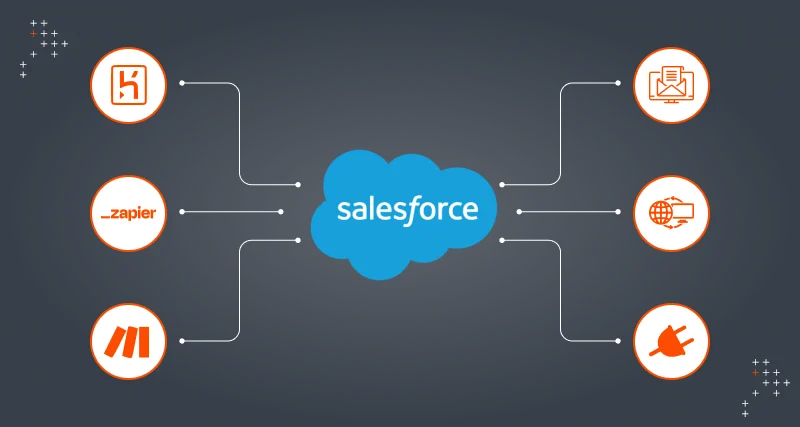
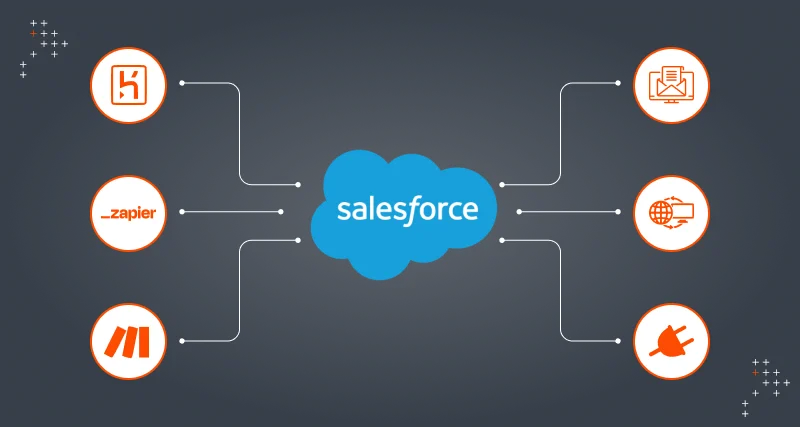
Integrating Other Business Systems
Many organizations use multiple systems alongside Salesforce, such as ERP platforms, billing systems, ecommerce platforms, marketing technologies, or specialized applications. Customers may need information that exists outside Salesforce, which makes integration an important consideration.
A properly planned Experience Cloud environment can potentially connect with other systems through appropriate integration architecture. However, integrations should be evaluated based on business requirements, data security, performance, maintenance, and scalability. Revcodex can help businesses assess how Experience Cloud fits into their existing technology environment and where integrations may be required.
Designing Experience Cloud Around Customer Journeys
An effective portal should be built around customer journeys rather than simply around available technology features. Before development begins, organizations should identify what customers actually need to accomplish. This could include finding an answer, submitting a case, checking a request status, downloading documentation, updating account information, or communicating with other users.
Mapping these journeys can help determine the most useful portal structure. It can also prevent businesses from adding unnecessary features that make the experience more complicated. The objective is to make important customer tasks easier, clearer, and more accessible.
Choosing Salesforce Experience Cloud Solutions in USA
Organizations evaluating Salesforce Experience Cloud Solutions in USA should look beyond basic platform functionality and consider implementation expertise, integration requirements, security, user experience, scalability, and ongoing support. A solution should be aligned with the company’s customer service model and the needs of its target users.
The right implementation can differ significantly between a B2B organization, ecommerce company, financial service provider, software business, manufacturer, or professional service organization. Businesses should therefore define their customer journeys and operational goals before selecting a specific configuration.
When Salesforce Experience Cloud Consulting Services Can Help
Salesforce Experience Cloud Consulting Services in USA can be useful when an organization needs support with strategy, architecture, implementation planning, customization, integration, migration, user experience, security, or ongoing optimization. Consulting can help businesses translate customer service requirements into a practical Salesforce solution.
A consulting engagement may begin with an assessment of the existing Salesforce environment and customer support processes. From there, the team can identify opportunities for self-service, case management, knowledge access, automation, integrations, and portal improvements. This structured approach can reduce the risk of building a portal that looks attractive but does not solve the organization’s actual service challenges.
Why Revcodex Can Be Considered for Experience Cloud Projects
Revcodex can be considered by organizations exploring Salesforce Experience Cloud for customer service and digital engagement requirements. Experience Cloud projects often involve multiple components, including user experience, Salesforce configuration, data access, security, integrations, workflows, and ongoing optimization. Taking these elements into account during planning can help create a more useful and sustainable digital experience.
For businesses evaluating Salesforce Experience Cloud Consulting Services in USA, the focus should be on understanding the organization’s existing Salesforce environment, customer service processes, target audience, and desired customer journeys. Revcodex can support this type of structured approach by helping businesses think through the technology and operational requirements associated with an Experience Cloud initiative.
Best Practices for a Customer Service Experience Cloud Portal
A customer service portal should remain focused on usability and customer needs. Adding too many features can make navigation difficult, while insufficient information can force customers back to traditional support channels. The ideal structure depends on the organization’s customers and service model.
A few practical principles can guide the implementation:
- Keep frequently used support resources easy to find.
- Make case submission clear and simple.
- Provide relevant knowledge content before customers submit a request.
- Use appropriate access controls for customer-specific information.
- Monitor portal usage and continuously improve based on customer behavior.
These principles can help businesses create a digital support environment that complements their existing customer service operation.
The Future of Digital Customer Service With Experience Cloud
Customer expectations are likely to continue evolving as digital experiences become more integrated into everyday interactions. Businesses will increasingly need to provide convenient self-service while maintaining access to human support for complex situations. Salesforce Experience Cloud can be part of this broader shift by connecting customers with relevant information, service processes, communities, and Salesforce-powered experiences.
The long-term value of an Experience Cloud implementation depends on how well it adapts to changing customer needs. Organizations should regularly review knowledge content, portal usability, support journeys, security, integrations, and analytics. Continuous improvement can help ensure that the platform remains useful rather than becoming another digital system that customers struggle to navigate.
Final Thoughts
Salesforce Experience Cloud can support customer service operations by bringing self-service, knowledge access, case submission, customer communication, community engagement, and Salesforce-connected experiences into a centralized digital environment. When carefully designed, it can help customers find information more conveniently while giving service teams a structured way to manage interactions and focus their time on issues that require direct assistance.
For organizations considering Salesforce Experience Cloud in USA, the most important step is to begin with customer needs and service processes rather than technology features alone. A successful implementation should consider user journeys, content, data access, security, integrations, automation, mobile usability, analytics, and long-term maintenance. Salesforce Experience Cloud Solutions in USA can therefore become more than a customer portal when they are connected to a broader customer experience strategy.
Whether a business is exploring its first customer community, modernizing an existing support portal, or looking for Salesforce Experience Cloud Consulting Services in USA, careful planning can make a significant difference. Revcodex can be considered as a technology partner for organizations evaluating how Experience Cloud can fit into their customer service operations and broader digital strategy. The ultimate objective is to create a customer experience that is accessible, organized, secure, and genuinely useful at every stage of the support journey.
FAQs About Salesforce Experience Cloud and Customer Service
What is Salesforce Experience Cloud used for?
Salesforce Experience Cloud is used to create digital experiences for customers, partners, employees, and communities. In customer service, it can provide access to knowledge resources, support information, case-related interactions, communities, and other Salesforce-connected services.
How does Salesforce Experience Cloud support customer service?
Salesforce Experience Cloud can support customer service by enabling self-service, knowledge access, case submission, customer communication, community interaction, and access to relevant information. It can help customers complete appropriate tasks without requiring direct assistance for every request.
Can Experience Cloud reduce customer support workload?
Experience Cloud can potentially reduce repetitive support interactions by giving customers access to self-service resources and knowledge content. The impact depends on the quality of the content, portal design, customer adoption, and the organization’s overall support processes.
What are Salesforce Experience Cloud Solutions in USA?
Salesforce Experience Cloud Solutions in USA refer to implementations and services that use Experience Cloud to create customer, partner, or community experiences for organizations operating in the United States. Solutions can include portal development, configuration, integrations, customization, security, and ongoing support.
Can customers submit support cases through Experience Cloud?
Yes, an Experience Cloud environment can be configured to allow customers to submit support cases or requests. The exact functionality and workflow depend on the organization’s Salesforce configuration, permissions, service processes, and implementation.
What are Salesforce Experience Cloud Consulting Services in USA?
Salesforce Experience Cloud Consulting Services in USA can include strategy, requirements analysis, architecture planning, implementation guidance, configuration, customization, integration, security planning, migration, optimization, and ongoing support for Experience Cloud projects.
Can Experience Cloud integrate with Salesforce Service Cloud?
Experience Cloud can be used alongside Salesforce Service Cloud to create customer-facing experiences connected to service processes. The specific integration and functionality depend on the Salesforce products, configuration, permissions, data model, and business requirements.
Is Salesforce Experience Cloud suitable for B2B customer service?
Experience Cloud can be used for B2B customer service, particularly when businesses need customer portals, knowledge access, support case interactions, account-related experiences, or communities. The portal can be designed around the specific needs of business customers and their relationship with the organization.
How does Experience Cloud improve customer self-service?
Experience Cloud can improve self-service by providing customers with centralized access to knowledge articles, FAQs, documentation, support resources, case functionality, and other relevant information. A well-organized portal can help users find answers without contacting a service representative for every basic question.
What should businesses consider before implementing Experience Cloud?
Businesses should consider customer journeys, user requirements, Salesforce architecture, data security, permissions, integrations, knowledge content, mobile usability, case management, scalability, analytics, and ongoing maintenance. Defining these requirements before development can help create a more effective customer experience.
Why should a business work with Revcodex for Salesforce Experience Cloud?
Revcodex can be considered for organizations exploring Salesforce Experience Cloud solutions and consulting requirements. A structured approach can help businesses evaluate their customer service processes, user journeys, Salesforce environment, integration needs, security requirements, and long-term digital experience objectives.